

Table of Contents
- What Makes a Pergola Kit Truly Wind-Resistant
- Aluminum vs Wood Pergolas for Wind: Which Holds Up?
- Louvered Pergola Wind Resistance Ratings: What the Numbers Mean
-
Top Durable Pergola Kits for Windy Areas
- Best Overall: Alora 10x19 FT Powder-Coated Aluminum Louvered Pergola (SAK78345)
- Best Mid-Range Louvered Kit: Alora Aluminum Louvered Pergola With Drainage (SAK94316)
- Best Retractable Option: Alora 11x16 FT Motorized Retractable Pergola (SAK16804)
- Best Budget Pick: Alora 11x20 FT Retractable Aluminum Pergola (SAK54612)
- How to Anchor a Pergola in High Wind: Installation Best Practices
- Permits, Building Codes, and Coastal Considerations
- Choosing the Right Durable Pergola Kit for Windy Areas
- Conclusion
Last Updated: August 28, 2026
Choosing the wrong pergola in a windy backyard is an expensive mistake. Structures fail not because of poor design, but because homeowners select kits built for calm patios and bolt them into exposed yards where gusts regularly hit 40, 50, or 60 mph. At Grilling Spaces, we've curated durable pergola kits for windy areas specifically because we know how quickly a poorly anchored structure becomes a liability. Below, we'll walk through what separates a wind-rated pergola from a decorative one, break down the top kits available, and cover installation and permitting details most guides skip.
Quick Picks:
- Best Overall: Alora 10x19 FT Powder-Coated Aluminum Louvered Pergola (SAK78345), engineered to 73 mph wind resistance
- Best Mid-Range Louvered: Alora Aluminum Louvered Pergola With Drainage (SAK94316), rust-resistant aluminum with galvanized steel roof
- Best Retractable: Alora 11x16 FT Motorized Retractable Pergola (SAK16804), six powder-coated poles, fire-resistant canopy
- Best Budget Pick: Alora 11x20 FT Retractable Aluminum Pergola (SAK54612), dual adjustable canopy sections, two-hour assembly
What Makes a Pergola Kit Truly Wind-Resistant
A wind-resistant pergola is engineered with a verified wind load rating, heavy-duty fasteners, and a frame-to-foundation connection designed to transfer gust forces safely into the ground.
![[10X19FT] Alora Premium Powder-Coated Aluminum Pergola With Adjustable Louvers (SAK78345)](https://cdn.shopify.com/s/files/1/0943/3366/5596/files/10x19ft-premium-powder-coated-aluminum-pergola-with-adjustable-louvers-sak78345-lifestyle.jpg?v=1785166664)
Wind Load Ratings and mph Thresholds Explained
Wind load is the force per unit area that wind exerts on a structure, calculated based on local wind speed, surface area, and exposure category. For residential pergolas, the relevant thresholds are:
| Wind Zone | Sustained Wind Speed | Typical Locations |
|---|---|---|
| Standard | Up to 45 mph | Inland, sheltered yards |
| Moderate | 45-65 mph | Open suburban lots, hilltops |
| High-Wind | 65-90 mph | Coastal zones, tornado corridors |
| Hurricane | 90+ mph | Gulf Coast, Atlantic Coast |
According to ASCE 7 wind load standards for structures, design wind speed for residential structures is determined by geographic location using wind speed maps. A pergola rated to 73 mph handles most severe thunderstorm gusts and qualifies as a high-wind structure. Anything below 50 mph suits only sheltered, low-exposure yards.
Structural Integrity: Frame, Fasteners, and Post-to-Beam Connections
Extruded aluminum outperforms wood and vinyl: it doesn't warp, doesn't absorb moisture that weakens joints, and maintains tensile strength through temperature swings. Powder-coated finishes add corrosion barriers critical in salt spray environments.
What to check in any kit:
- Foundation bolts: Expansion bolts or anchor bolts rated for post diameter; surface-level screws are inadequate for high-wind zones.
- Post-to-beam connection: Bracketed or mortised joints with multiple fastener points, not single bolts.
- Gusset plates or diagonal bracing: Triangulated geometry resists racking forces from lateral gusts.
- Roof panel attachment: Louvered panels should lock into tracks, not rest in open channels.
The weakest point is almost always the connection, not the post itself.
Aluminum vs Wood Pergolas for Wind: Which Holds Up?
Aluminum wins for wind resistance. Wood pergolas absorb moisture, expand and contract seasonally, and gradually loosen post-to-beam connections under lateral load. Vinyl falls between the two, maintenance-free but with lower tensile strength than extruded aluminum.
Aluminum's advantages for windy areas include rust-free construction, consistent dimensional stability that keeps connection tolerances tight year after year, lighter weight that reduces overturning moment during gusts, and powder-coated finishes that resist fade and corrosion in coastal and high-humidity environments.
As documented in International Building Code structural requirements for outdoor structures, pergolas attached to a home are subject to the same wind load requirements as the building itself, meaning material choice directly affects code compliance.
Louvered Pergola Wind Resistance Ratings: What the Numbers Mean
Louvered pergola wind resistance ratings describe the maximum sustained wind speed the structure can withstand with louvers in a specific position. The number changes based on whether louvers are open, partially open, or closed.

Open vs Closed Louvers During High Winds
Open louvers dramatically reduce wind load on the roof structure. Wind passes through gaps rather than pressing against a solid surface. A pergola rated to 73 mph with open louvers may only be rated to 45-50 mph with louvers fully closed, because the closed position creates a solid sail effect.
Retractable Canopy Performance in Gusty Conditions
Retractable canopy pergolas follow the same logic: the canopy should be fully retracted before high winds arrive. A taut polyester canopy in 50 mph gusts acts as a sail and transfers enormous lateral force to the frame and anchor points. Quality retractable kits use secure locking mechanisms that hold the canopy in the retracted position even if wind catches it unexpectedly.
Top Durable Pergola Kits for Windy Areas
The kits below represent the strongest options at Grilling Spaces for homeowners prioritizing structural performance in exposed or high-wind yards.
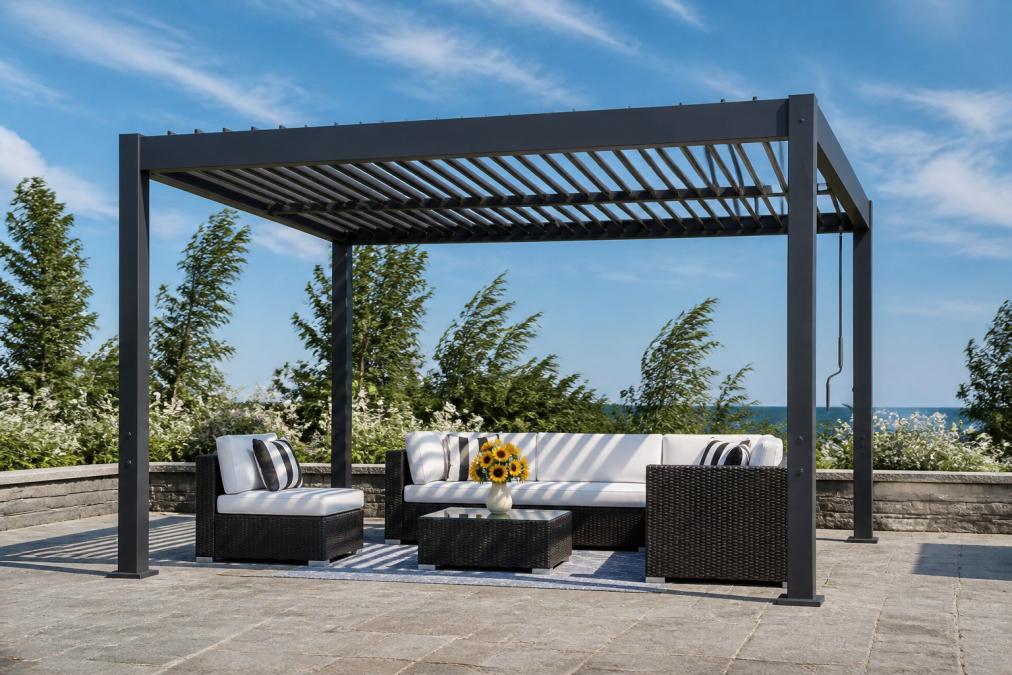
Best Overall: Alora 10x19 FT Powder-Coated Aluminum Louvered Pergola (SAK78345)
The Alora SAK78345 is the strongest wind-rated kit in this lineup, rated to 73 mph sustained wind, the only option here with a published mph threshold. The rust-resistant extruded aluminum frame carries a black powder-coated finish that resists corrosion and UV fade. Louvers pivot on a built-in crank for adjustable light, shade, and ventilation. The integrated drainage system channels rain through the columns and out at the base, keeping the seating area dry without external guttering. Installation uses prefabricated rails and louvers with included expansion bolts.
What works: Published 73 mph wind resistance rating, engineered drainage, crank-adjustable louvers, expansion bolt anchoring included.
What to know: At $7,399.97, this is the premium option. For a permanent, high-wind installation where structural failure isn't an option, it's the right call.
Best Mid-Range Louvered Kit: Alora Aluminum Louvered Pergola With Drainage (SAK94316)
The SAK94316 pairs a rust-resistant aluminum frame with a galvanized steel roof, giving roof panels added rigidity compared to aluminum-only constructions. The fully adjustable louvered roof handles sun control, UV filtering, and rain protection. The integrated drainage system channels water through beams and columns to the ground, preventing standing water that adds weight and stress during storms.
At $1,599.97, this kit delivers well-engineered louvered structure at a fraction of the premium tier's cost. The galvanized steel roof is a meaningful structural advantage over vinyl alternatives.
What works: Galvanized steel roof panels, aluminum frame, integrated drainage, adjustable louvers.
What to know: No published mph rating in product specs. For moderate wind zones, the aluminum-and-steel construction is solid. For documented high-wind or coastal locations, the SAK78345's verified rating is worth the additional investment.
Best Retractable Option: Alora 11x16 FT Motorized Retractable Pergola (SAK16804)
The SAK16804 uses a motorized retractable canopy that disappears entirely when conditions deteriorate. Six powder-coated aluminum poles provide the structural foundation. The canopy fabric is fire-resistant, water-repellent, and fade-resistant polyester with a secure locking mechanism that holds position against unexpected gusts. At $1,299.97, it's the mid-range retractable option with motorized convenience and genuine weather-resistant construction.
What works: Motorized operation, fire-resistant canopy fabric, six-pole aluminum frame, secure locking mechanism.
What to know: Retract the canopy before any significant wind event.
Best Budget Pick: Alora 11x20 FT Retractable Aluminum Pergola (SAK54612)
The SAK54612 covers the most ground at $899.97 for an 11x20 ft structure. Dual independently adjustable canopy sections with secure safety locking systems let you dial in shade and sunlight throughout the day. The premium aluminum frame carries a dark gray powder coating that resists rust, fade, and corrosion. Two-person assembly completes in under two hours.
What works: Largest coverage area in the lineup, dual adjustable canopy sections, powder-coated aluminum frame, fast assembly.
What to know: The budget price reflects a retractable canopy design rather than engineered louvers. In moderate wind conditions with proper anchoring, it performs well.
| Kit | Price | Type | Wind Rating | Best For |
|---|---|---|---|---|
| Alora SAK78345 | $7,399.97 | Louvered aluminum | 73 mph | High-wind/coastal zones |
| Alora SAK94316 | $1,599.97 | Louvered aluminum + steel | Not published | Moderate wind zones |
| Alora SAK16804 | $1,299.97 | Motorized retractable | Not published | Versatile coverage |
| Alora SAK54612 | $899.97 | Retractable dual canopy | Not published | Budget, large coverage |
How to Anchor a Pergola in High Wind: Installation Best Practices
Anchoring is where most DIY pergola installations fail. A well-engineered kit bolted to an inadequate foundation will still fail in high winds.
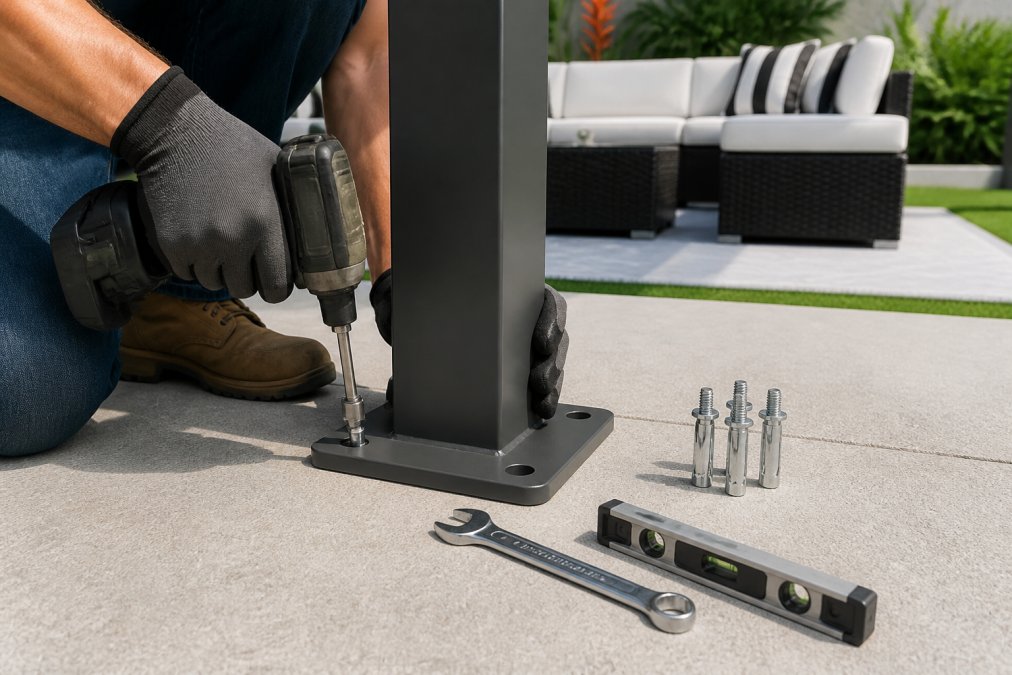
Foundation Bolts and Concrete Footings
For concrete patios: Expansion bolts (wedge anchors) are the standard. They expand inside a drilled hole and create a mechanical lock with the concrete. The bolt diameter and embedment depth must match the post load. Most quality aluminum pergola kits include expansion bolts sized for their post dimensions.
For ground installations: Concrete footings are correct. A post base set in poured concrete extends below the frost line and resists both vertical uplift and lateral overturning forces.
For deck installations: The deck's structural framing must be assessed before anchoring a pergola to it. Consult a structural engineer before mounting a large pergola to a deck in a high-wind zone.
Anchoring checklist:
- Confirm base material (concrete slab, deck frame, or ground)
- Use expansion bolts for concrete; wedge anchor diameter matches post base plate
- Concrete footings for ground installations, below frost line
- Torque all fasteners to manufacturer specification, not hand-tight
- Check post plumb before final torque
- Re-check fastener torque after first winter season
DIY vs Professional Installation in High-Wind Zones
DIY installation is viable for most aluminum pergola kits in moderate wind zones. In high-wind zones, professional installation isn't just about convenience; it's about liability and structural confidence. A licensed contractor anchoring a pergola to your home's structure will pull a permit, which means the installation is inspected and documented. If the structure fails in a storm, that documentation matters for insurance claims.
If you're in a coastal climate, a tornado corridor, or anywhere with regular gusts above 60 mph, hire a licensed contractor for the anchoring work even if you handle the frame assembly yourself.
Permits, Building Codes, and Coastal Considerations
Most homeowners skip the permit question entirely. This creates real problems. Pergolas are regulated structures in most jurisdictions. Whether a permit is required depends on the structure's size, whether it's attached to the home, and local zoning ordinances. Any pergola over 200 square feet, any attached pergola, and any pergola in a flood zone or coastal high-hazard area will require a building permit.
According to International Residential Code requirements for accessory structures, structures in high-wind design categories must meet specific wind load requirements that exceed standard residential construction standards. A pergola installed without a permit in these zones may not be covered by homeowner's insurance if it causes property damage.
Coastal-specific considerations:
- Salt spray corrosion: Aluminum and powder-coated finishes are correct. Galvanized steel components add additional corrosion resistance.
- FEMA flood maps: Properties in Special Flood Hazard Areas (SFHAs) have additional structural requirements. Check your property's flood zone designation before installing any permanent structure.
- HOA covenants: Many coastal and suburban communities have HOA restrictions on pergola dimensions, colors, and placement.
For homeowners in hurricane-prone states, the FEMA guidelines for wind-resistant construction in coastal areas provide specific guidance on anchoring requirements and structural standards that apply to permanent outdoor structures.
Choosing the Right Durable Pergola Kit for Windy Areas
The right kit comes down to three decisions: wind exposure, roof type, and budget.
Wind exposure first. If you're in a coastal climate, open lot, or any area with regular gusts above 55 mph, the Alora SAK78345's published 73 mph wind resistance rating is the relevant spec. For moderate wind zones with occasional severe storms, the SAK94316's aluminum-and-galvanized-steel construction handles the load at a more accessible price.
Roof type second. Louvered roofs offer year-round weather control and maintain structural integrity when managed correctly. Retractable canopies offer flexibility and lower cost but require proactive management before storm events.
Budget third. The pricing range spans $899.97 to $7,399.97. The SAK78345's premium reflects genuine engineering: a published wind rating, integrated drainage, and expansion bolt anchoring. The SAK54612 at the budget end delivers a large, well-built retractable structure for moderate conditions.
For most homeowners in standard suburban lots, the SAK94316 at $1,599.97 hits the best balance of engineered construction, adjustable weather control, and value. For coastal or high-wind installations where structural failure has real consequences, the SAK78345 is the correct choice regardless of price.
| Your Situation | Recommended Kit |
|---|---|
| Coastal or high-wind zone, permanent installation | Alora SAK78345 ($7,399.97) |
| Moderate wind zone, want louvered control | Alora SAK94316 ($1,599.97) |
| Want motorized convenience, moderate exposure | Alora SAK16804 ($1,299.97) |
| Budget-conscious, large coverage area needed | Alora SAK54612 ($899.97) |
The anchoring system matters as much as the kit rating. A 73 mph rated pergola surface-bolted to a cracked concrete slab will fail before a properly anchored 45 mph kit. Invest in the foundation work.
Frequently Asked Questions
How much wind can a standard pergola kit withstand?
Wind resistance varies significantly by material and design. Basic wood or canvas pergola kits may handle gusts up to 35-50 mph before showing stress. Engineered aluminum louvered pergola kits, like the Alora SAK78345, are rated for winds up to 73 mph. For hurricane-prone or coastal areas, look for kits with documented wind load ratings, reinforced post-to-beam connections, and expansion bolt anchoring systems rather than relying on surface-level claims.
Are aluminum pergola kits more wind-resistant than wood?
Yes, in most cases. Extruded aluminum frames offer a higher strength-to-weight ratio than wood, resist warping and cracking from moisture cycles, and accept tighter fastener tolerances at post-to-beam connections. Wood pergolas can perform adequately in moderate wind zones when properly anchored, but they require consistent maintenance to retain structural integrity. For windy areas, powder-coated aluminum with engineered anchoring systems is the more reliable long-term choice.
Do louvered pergolas need to be open during high winds?
For most louvered pergola kits, opening the louvers during high winds reduces wind load on the roof by allowing air to pass through rather than pressing against a solid surface. Check the manufacturer's guidance for your specific model. The Alora SAK78345, for example, is rated to 73 mph with louvers in position, but opening them during severe gusts adds an extra margin of safety and reduces stress on the anchoring system.
What are the best anchoring methods for pergolas in windy areas?
Concrete footings with embedded foundation bolts provide the strongest anchoring for permanent pergola installations. For patio surfaces, expansion bolts drilled into concrete slabs are the standard approach. Ground-stake systems work for temporary or semi-permanent setups on soil but offer less gust resistance. In high-wind zones or coastal climates, always use corrosion-resistant stainless steel fasteners and verify that your anchoring method meets local building code requirements before installation.
Do I need a permit to install a pergola kit in a windy area?
Permit requirements depend on your local municipality and the structure's size, height, and attachment method. Many jurisdictions require a building permit for permanent pergolas over a certain square footage or when attached to a home. High-wind zones, particularly those governed by ASCE 7 wind load standards, may also require engineered drawings. Contact your local building department before installation to confirm requirements and avoid fines or mandatory removal.
Selecting durable pergola kits for windy areas requires matching wind load ratings to your actual exposure conditions, choosing the right roof system for how you'll manage it, and anchoring the structure correctly from day one. Grilling Spaces carries the full Alora lineup, with free shipping on most orders within the continental US. Browse the collection and build the outdoor living space that performs as well as it looks.
This article was written using GrandRanker